
Breakdown of Daily Life
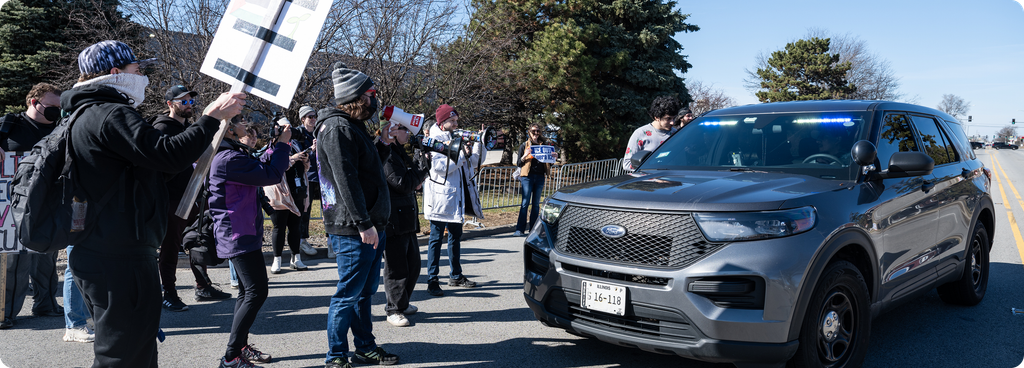
Disruption is deliberate
Upending a community’s routine isn’t a side effect of a federal takeover, it’s part of the strategy. When agents arrived in Minneapolis and Chicago, their violent, chaotic presence spread confusion and fear.
By making daily activities feel risky, like school drop-offs, work commutes, and grocery store trips, people start avoiding the places they depend on. When people pull back, federal overreach goes unchecked.
Hear from people who lived it
3 signs to look for
Deserted public spaces
Reduced foot traffic, missing workers, children kept home, delayed medical care, families avoiding schools, places of worship, and public services.
Infiltration of spaces
Federal activity at bus stops, restaurants, commercial corridors, and other community spaces. Agents gathering in parking lots, circling blocks, using surveillance tools, and blending in with plain clothes and community-specific markers, like flags or bumper stickers.
Escalation of aggression
Flash bangs, tear gas, and physical force used against legal observers and residents. Journalists face intimidation, while people documenting harm face doxxing and retaliation.
Disruption is deliberate
The most important thing is to get and stay connected with your neighbors, then help others do the same. That can mean food delivery, rides, rent relief, childcare, or accompaniment when everyday activities become harder or riskier. Economic, emotional, and spiritual support can help neighbors being targeted feel cared for, protected, and less isolated.